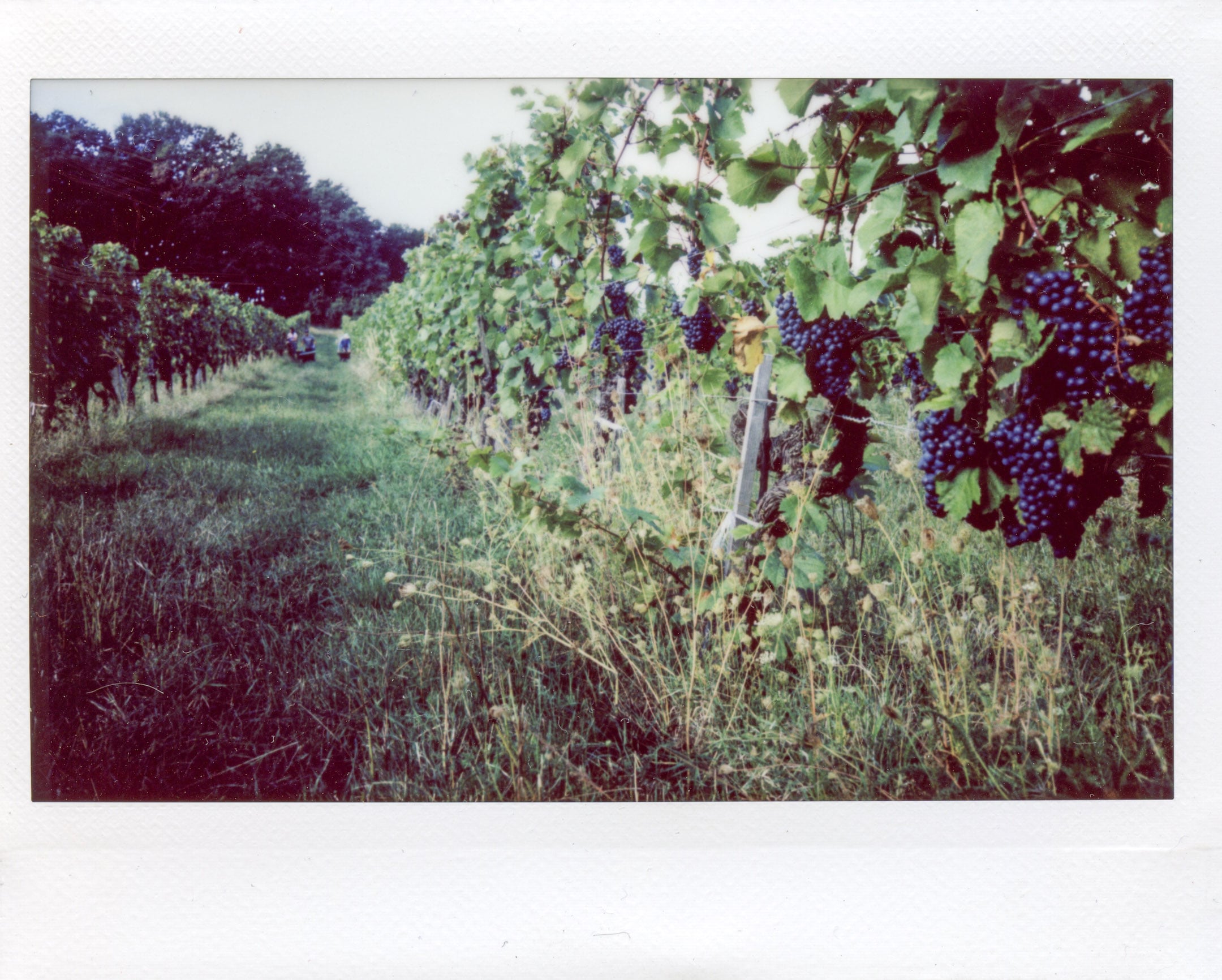
Horitschon is surrounded by grape vines, they even seem to make up a good part of the village. The Weninger estate lies in the middle of the village, and here the vines are everywhere too. In the cellar, in our hands, and above all in our heads. We have been making wine here for generations. We used to sell it unbottled (tank trucks), but we started selling everything in small bottles in 1982. No matter what the vessel, we always take great care with the wine. Since then, Franz Weninger has been producing his wine according to this motto, and since 2006, based on biodynamic quality criteria as well.
He focuses most of his attention on his vineyards, but important process also take place in the cellar. Only his own yeasts are used in the wooden fermentation vats, the maturation periods in the small wooden barrels allow the wines to develop into harmonious overall works of art. But as Franz Weninger says, the winemaker can only bring out that which is already in the grape. This is why you need the soil, the water, and the environment. And because of the nature of the sites, these conditions can vary from meter to meter. That is why he places so much importance on the connection between the right grape variety and the right soil – the final product is proof of this passion and can be passed on to all his customers.
The new estate, which was designed and built by the architects Raimund Dickinger and Kriso Leinfellner in 1998, preserves the form of the long farmhouse typical in central Burgenland. With all its senses, it opens out to the south, from where the sun comes to the grapes and the people. The cellar with its wooden barrels, bottling facilities, tasting room, and office is generously dimensioned and provides a wonderful working atmosphere. Just one floor up, the guest rooms with balconies provide a relaxing setting for the wine-interested visitor.
The Winemaker Franz Weninger had known his parent’s small estate for thirty years when he took over operations in 1982. It was only seven hectares, but the very first year, in 1983, he managed to produce the internationally recognized Blaufränkisch Kabinett. It was a very promising beginning, followed by the expansion of the estate to its current size (28 hectares) combined with a further increase in quality. For years he has been ranked among the top national and international winemakers. The former family-run operation has grown in size, but the family has remained an important part of the estate: as co-workers involved in the day-to-day organization and administration, as namesakes for prize-winning wines, or as a new generation of winemaker who brings with him challenging ideas and his own wine experience.
Hungary – Looking Across the Border From Horitschon, you look out on a vast countryside all the way to the border and beyond. That caught Franz Weninger’s attention early on, and in 1992 he and the Hungarian winemaker Attila Gere jointly founded the Weninger & Gere Weingut in Villány. The Hungarian gastronomy scene was thrilled by this collaboration, and soon the entire first vintage was sold out. Since then, they have been producing the finest red wine on 13 hectares of land that enjoys both a Mediterranean and continental climate. Fermentation in stainless steel tanks with controlled temperatures, aging on the lees for three weeks, biological acid decomposition, and racking in small oak barrels. This retains the typical southern fruit of the wines and produces the best results with Weninger’s favorites: Merlot, Cabernet Sauvignon, a little Cabernet Franc, and a cuvée called Phoenix made primarily of Kékfrankos.
Not quite so far over the border lies the village of Balf near Sopron. In 1997 Franz Weninger purchased vineyards on two sites, Spern Steiner and Frettner, which are among the best sites in Hungary and have been cultivated for centuries. In 2000 his son Franz Reinhard Weninger took over operations, and he has been successful in making a name for himself in the Hungarian scene. In 2006 the wine magazine “Borbarat” ranked him as number seven in its list of favorite Hungarian wineries.
The Team Only happy people can make good wine. We are a heterogeneous blend of people, each of us a professional in his or her area. Every production step is important, but in addition to skills, personalities play a key role too.
Burgenland
Production 1.200 hl per year, which is equivalent to 150.000-200.000 bottles
Cellar 250,000 liters (barrels and tanks, 500 barriques)